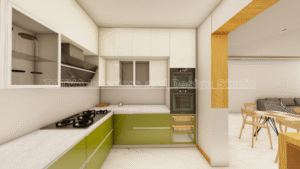
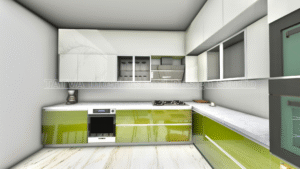
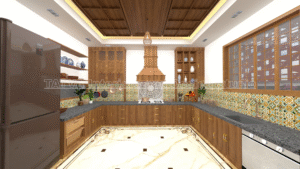
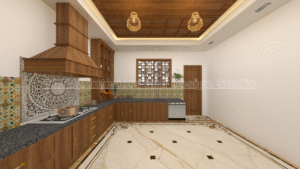
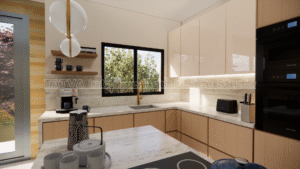
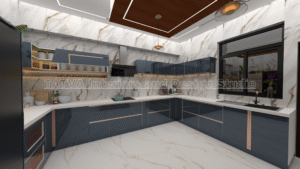
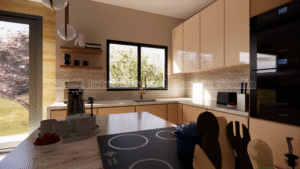
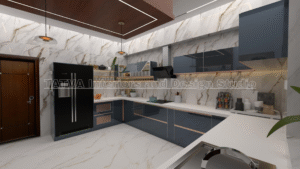
How to Choose the Right Kitchen Chimney and Hob for Your Modular Kitchen
Planning a modular kitchen involves more than selecting cabinet colours and countertop materials. You must also choose appliances that suit your cooking habits, available space and interior design.
A kitchen chimney helps remove cooking fumes, grease and odours when properly selected and installed. A hob provides a dedicated cooking surface and influences the arrangement of your countertop and cabinets.
However, choosing the wrong size or ignoring installation requirements can create problems later. Therefore, it is important to plan both appliances before finalising your modular kitchen design.
If you are planning a kitchen in Bengaluru or elsewhere in Karnataka, this guide will help you understand the different options and make a practical choice.
At Tatva Interiors & Design Studio, we believe that a well-designed kitchen should combine appearance, functionality and thoughtful space planning. Let’s explore how to select the right chimney and hob for your home.

1. Why Should You Plan Your Chimney and Hob Together?
The chimney and hob work as a connected cooking system. Their positions affect ventilation, cabinet dimensions, electrical connections and the available countertop area.
Choosing them separately can lead to unnecessary adjustments during installation.
For example, a chimney that is too wide for the available wall space may conflict with adjacent cabinets. Similarly, a hob that does not match the planned countertop cut-out can require modifications.
Planning both appliances together helps you:
- Coordinate the hob and chimney dimensions.
- Plan suitable ventilation and duct routing.
- Position electrical points correctly.
- Design cabinets around appliance requirements.
- Maintain practical cooking and preparation space.
- Reduce avoidable changes during installation.
Before purchasing appliances, confirm the kitchen layout and review the installation instructions for the selected models.
2. Types of Kitchen Chimneys
Kitchen chimneys come in several configurations. The right type depends on your cooking area, cabinet arrangement and available ventilation route.
A. Wall-mounted chimney
A wall-mounted chimney is installed above a hob positioned against a wall.
It is a common choice for many Indian modular kitchens because the arrangement can fit naturally into a straight, L-shaped or parallel layout.
Advantages:
- Suitable for many conventional kitchen layouts.
- Available in different widths and designs.
- Can coordinate with overhead cabinets.
- Offers several ducted and recirculating model options.
Things to consider:
Check the available wall width, hob position and chimney installation height. Also, plan the duct route before finalising the overhead cabinets.
B. Island chimney
An island chimney is designed for a hob positioned on a kitchen island or peninsula where a compatible installation system is required.
It can create a striking focal point in a spacious kitchen.
Advantages:
- Works with suitable island cooking arrangements.
- Can complement open-plan kitchen designs.
- Offers a distinctive architectural appearance.
Things to consider:
Island chimneys require careful planning for structural support, ventilation or recirculation, electrical connections and ceiling coordination.
They may not be practical for compact kitchens because the island itself requires adequate circulation space.
C. Built-in or integrated chimney
Some chimney systems integrate more closely with cabinetry or conceal parts of the appliance within a designed enclosure.
These options can suit kitchens where the homeowner prefers a streamlined appearance.
Advantages:
- Can create a visually integrated design.
- May coordinate neatly with overhead cabinetry.
- Can reduce the visual prominence of the appliance.
Things to consider:
Confirm the manufacturer’s cabinet dimensions, clearances, access requirements and ventilation instructions before designing the enclosure.
D. Angled chimney
An angled chimney uses an inclined front panel rather than a conventional flat front.
Its appearance may suit contemporary kitchens.
However, the shape alone does not determine extraction performance. Compare the appliance specifications, filter arrangement, dimensions and installation requirements before selecting a model.
3. Ducted vs Ductless Kitchen Chimneys
One of the most important decisions is whether to choose a ducted or ductless chimney.
What is a ducted chimney?
A ducted chimney draws cooking fumes through a duct and expels the extracted air outside the building.
When the duct route and installation are appropriate, this arrangement can remove cooking pollutants and moisture from the indoor environment more effectively than simply recirculating the air.
Advantages include:
- Exhausting extracted air outdoors.
- Removing cooking moisture along with fumes, subject to the installation.
- Avoiding the need to return filtered air to the kitchen.
However, performance depends on the appliance, duct design, installation quality and external exhaust location.
What is a ductless chimney?
A ductless chimney draws air through filters and returns the treated air to the room.
Many such systems use grease filtration and activated-carbon filtration, depending on the model.
Advantages include:
- Greater flexibility when an external duct route is difficult.
- No need for a conventional outdoor exhaust duct.
- Potentially easier installation in some existing kitchens.
However, ductless systems do not remove indoor air in the same way as a ducted system. They also do not provide equivalent removal of cooking moisture and combustion products.
Filters need regular cleaning or replacement according to the manufacturer’s instructions.
Which type should you choose?
Where a suitable outdoor exhaust route is possible, a ducted system is often worth considering.
In apartments where duct routing is restricted, a compatible recirculating model may be an alternative.
Before deciding, check apartment rules, building restrictions and the feasibility of the exhaust route. Do not route exhaust air into an enclosed ceiling void or another unsuitable space.
4. How to Choose the Right Chimney Size
The chimney should be compatible with the hob dimensions and the cooking area.
Common chimney widths include 60 cm and 90 cm, although other sizes are available. These are product categories, not universal recommendations.
Measure your hob first
Check the overall width of the hob and the manufacturer’s recommended chimney coverage.
A chimney that adequately covers the cooking area can help capture rising fumes. However, performance also depends on mounting height, airflow, hood design and cross-drafts.
Check the available wall space
Measure the wall above the hob and note the position of cabinets, windows and other obstructions.
The chimney should fit within the available space while meeting its installation requirements.
Consider the cooking arrangement
A compact cooking area may need a different chimney configuration from a larger hob used for frequent, heavy cooking.
Choose the appliance according to the actual cooking setup rather than selecting a model based on appearance alone.
Follow the specified mounting height
Every chimney model has installation requirements. Follow the manufacturer’s recommended mounting height and the applicable safety instructions.
Do not assume that all gas and induction hob combinations use the same clearance.
5. What Chimney Suction Capacity Do You Need?
Chimney suction capacity is commonly expressed in cubic metres per hour (m³/h). It describes the volume of air an appliance can move under specified conditions.
However, a higher advertised number does not automatically mean a better chimney for every kitchen.
Consider the following factors.
Kitchen size: Larger or more open kitchens may need different ventilation arrangements.
Cooking frequency: Frequent frying, deep-frying and high-heat cooking can generate more grease and fumes than occasional light cooking.
Chimney design: Hood dimensions, filters and internal construction influence how effectively fumes are captured.
Duct arrangement: Long, narrow or sharply bent ducts can increase airflow resistance.
Installation quality: Incorrect positioning or poorly fitted ductwork can reduce practical performance.
Noise level: Compare the manufacturer’s noise specifications at relevant operating speeds.
For many homes, it is more useful to compare suitable models based on their stated performance and installation requirements than to choose the highest number in a product advertisement.
6. Types of Kitchen Hobs
Your hob should suit your cooking style, available fuel connections and countertop design.
A. Gas hob
A gas hob uses burners powered by the specified gas supply.
It suits households that prefer cooking with a visible flame and direct heat adjustment.
Advantages:
- Familiar cooking method for many Indian households.
- Works with suitable cookware.
- Heat can be adjusted using the controls.
Things to consider:
Plan the gas connection, ventilation and clearances according to the manufacturer’s instructions and applicable safety requirements.
The countertop cut-out, hob dimensions and nearby cabinetry must also be coordinated.
B. Built-in gas hob
A built-in gas hob sits within a prepared countertop opening.
It creates a coordinated appearance when installed correctly.
Before fabrication, verify the exact model dimensions, cut-out measurements, edge clearances and access requirements.
The installer must also confirm that the gas connection can be installed safely and serviced when necessary.
C. Induction hob
An induction hob heats compatible cookware through electromagnetic induction.
It offers a smooth cooking surface and precise electronic controls on many models.
Advantages:
- Easy-to-clean cooking surface.
- Fast heating with compatible cookware.
- No open flame at the cooking surface.
- Useful control features on many models.
Things to consider:
Induction hobs require compatible cookware and an appropriate electrical connection.
Check the appliance’s rated power, circuit requirements and installation instructions before purchase.
Do not assume that an existing socket or circuit is suitable without verification by a qualified electrician.
D. Mixed cooking arrangements
Some households prefer a combination of gas and induction cooking.
This may be useful when different family members have different cooking preferences.
However, the countertop layout, available width, electrical load, gas connection and chimney coverage must all be planned together.
7. How to Select the Right Hob Size
Hob dimensions affect the available preparation space and the layout of nearby cabinets.
A compact hob may work well in a small kitchen, while a larger cooking surface may suit households that regularly use multiple vessels at once.
Before choosing a model, consider these points.
Number of burners or cooking zones
Choose according to the number of vessels you commonly use at the same time.
More burners are not always better if the kitchen has limited countertop space.
Vessel size
Large kadais, pressure cookers and other Indian cooking vessels need sufficient room.
Check the spacing between burners or cooking zones. A hob may have several burners but still feel crowded with large cookware.
Countertop dimensions
Measure the usable countertop length and confirm that the hob leaves enough preparation space.
Also check the required cut-out and minimum clearances around the appliance.
Cooking preferences
Gas may suit households that prefer flame-based cooking. Induction may suit those who prefer an electric cooking surface and have compatible cookware.
The best choice depends on your needs, available connections and budget.
8. How to Coordinate the Chimney and Hob With Modular Cabinets
Appliance planning should happen before the cabinet drawings are finalised.
Plan overhead cabinets
Confirm the chimney width, depth, mounting height and installation clearances before designing nearby overhead cabinets.
This helps maintain a coordinated appearance without obstructing the appliance.
Check the countertop cut-out
The hob manufacturer provides the dimensions required for the countertop opening.
Use the exact model specifications rather than estimating the cut-out from the hob’s overall width.
Coordinate the electrical points
Chimneys, induction hobs and other kitchen appliances may have different electrical requirements.
Plan the power points, circuit protection and access according to the product specifications and qualified electrical guidance.
Plan gas connections safely
If you choose a gas hob, coordinate the approved gas connection and shut-off arrangement with a qualified professional.
Avoid placing connections where they become inaccessible behind fixed cabinetry.
Allow service access
Appliances may require cleaning, maintenance or replacement.
Plan the cabinet design so that essential service points remain accessible according to the installation requirements.
9. How Much Does a Kitchen Chimney and Hob Cost?
The cost depends on the selected brands, appliance features, dimensions and installation requirements.
Rather than relying on a single price estimate, compare models using the same criteria.
Chimney cost factors
- Appliance type and width.
- Stated extraction performance.
- Filter design.
- Noise specifications.
- Controls and additional features.
- Ducting components and installation.
- Warranty and service arrangements.
Hob cost factors
- Gas or induction technology.
- Number of burners or cooking zones.
- Overall dimensions.
- Surface and burner materials.
- Controls and safety features.
- Installation and connection requirements.
Additional installation costs
Your kitchen project may also require ducting, electrical upgrades, gas connection work, countertop cutting or cabinet modifications.
These costs can differ substantially between a new kitchen and an existing kitchen renovation.
Ask your designer or contractor to specify which items are included in the quotation. Also confirm whether appliance supply, installation, ducting and connection work are included or charged separately.
10. Common Chimney and Hob Selection Mistakes
Mistake 1: Buying appliances before finalising the layout
This can lead to conflicts with cabinets, countertops and electrical points.
Finalise the appliance models early enough to incorporate their exact dimensions into the drawings.
Mistake 2: Choosing a chimney by suction capacity alone
Airflow figures do not tell the whole story.
Compare hood coverage, duct requirements, noise specifications and installation suitability.
Mistake 3: Ignoring the exhaust route
A ducted chimney needs a suitable route to the outside.
Check the route before purchasing the appliance, especially in apartments with building restrictions.
Mistake 4: Selecting a hob without checking cookware space
Consider your usual vessel sizes and the spacing between cooking zones.
A larger number of burners does not guarantee a more comfortable cooking experience.
Mistake 5: Overlooking electrical requirements
Induction hobs and other electrical appliances may require dedicated circuits or specific connections.
Have a qualified electrician verify the installation requirements.
Mistake 6: Ignoring maintenance
Chimney filters need appropriate cleaning or replacement. Hob surfaces and burners also require care according to the manufacturer.
Consider these requirements before choosing a model.
Mistake 7: Leaving installation until the end
Late appliance decisions can result in cabinet changes and additional costs.
Coordinate the chimney, hob, countertop, cabinets and electrical plan before fabrication.
11. A Practical Checklist Before Buying
Use this checklist before confirming your appliances.
- Measure the available hob and chimney space.
- Decide whether you prefer gas, induction or a combination.
- Confirm the chimney type and ventilation route.
- Check the exact model dimensions and clearances.
- Review the hob’s burner spacing and cookware compatibility.
- Confirm electrical and gas connection requirements.
- Check maintenance, warranty and service availability.
- Coordinate the appliance specifications with your kitchen drawings.
- Verify what the supplier and contractor include in their quotations.
These checks can reduce installation problems and help you make a more informed purchase.
12. How Tatva Interiors & Design Studio Can Help
A well-planned kitchen brings together appliances, cabinetry, materials, lighting and workflow.
At Tatva Interiors & Design Studio, we provide interior design and execution services for residential and commercial spaces.
Our services can include:
- Modular kitchen layout and space planning.
- Cabinet and storage design.
- Appliance placement coordination.
- Material and hardware selection.
- 2D drawings and 3D visualisation.
- Execution coordination according to the agreed project scope.
We aim to help homeowners make informed decisions before finalising their kitchen design.
Explore our interior design services to learn more about our offerings.
You can also view our project portfolio for examples of our design work.
Frequently Asked Questions
1. Which chimney is best for an Indian kitchen?
The best chimney depends on your cooking habits, hob dimensions, ventilation route and installation conditions. Compare suitable models using their specifications rather than selecting by suction capacity alone.
2. Is a ducted chimney better than a ductless chimney?
A ducted chimney expels extracted air outdoors when correctly installed. A ductless model filters and recirculates air. Choose according to the available exhaust route and the manufacturer’s recommendations.
3. What size chimney should I choose?
Select a chimney that provides suitable coverage for your hob and meets the manufacturer’s installation requirements. Confirm the dimensions and mounting height before purchasing.
4. Is induction better than a gas hob?
Induction offers a smooth cooking surface and requires compatible cookware and suitable electrical infrastructure. Gas suits households that prefer flame-based cooking. The right choice depends on your preferences and installation conditions.
5. Can I install a chimney in a small kitchen?
Yes, provided the selected model suits the kitchen dimensions and has a suitable ventilation or recirculation arrangement. Check the mounting requirements and cabinet clearances.
6. Should I buy the chimney before designing the kitchen?
It is best to shortlist or finalise the appliance model before completing the cabinet drawings. This allows the designer to coordinate dimensions, clearances and connections.
7. Does a kitchen chimney eliminate all cooking odours?
No chimney guarantees complete removal of every odour or airborne pollutant. Performance depends on the appliance, installation, cooking conditions and ventilation.
8. What should I check before installing an induction hob?
Confirm the rated power, compatible cookware requirements, countertop cut-out and electrical connection specifications. Have a qualified electrician verify the circuit and installation.
Conclusion
Choosing the right kitchen chimney and hob requires more than comparing brands and prices.
Consider your cooking habits, kitchen dimensions, ventilation options, appliance specifications and installation requirements. Then coordinate these choices with the modular cabinet and countertop design.
A suitable chimney can help manage cooking fumes, while the right hob can make everyday cooking more convenient.
Most importantly, finalise appliance requirements before fabrication begins. This helps reduce unnecessary modifications and supports a smoother installation process.
Planning a modular kitchen in Bengaluru, Kolar or Bangarpet?
Contact Tatva Interiors & Design Studio to discuss your kitchen layout, appliance planning and complete interior requirements.
Visit our contact page to get started.